You Won’t Believe What I Saw from the Sky Over Nazca
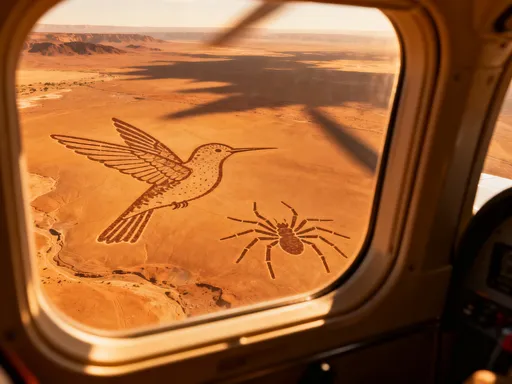
Flying over the Nazca Lines in Peru felt like unlocking a secret the earth had kept for centuries. From the ground, it’s just desert—endless and silent. But up there? A whole other world opens up. Ancient geoglyphs stretch across the barren landscape, forming shapes so precise, so massive, they can only be fully understood from the sky. This isn’t just sightseeing—it’s time travel with a view. Suspended thousands of feet above one of the driest places on Earth, passengers glimpse a civilization’s quiet legacy etched into stone and sand. The lines, some over 2,000 years old, were made by removing dark surface rocks to reveal the lighter soil beneath. From above, they coalesce into stunning figures: a hummingbird with outstretched wings, a spider with delicate legs, a mysterious humanoid form that seems to gaze skyward. These are not random markings but deliberate, intricate designs, visible only from the air—raising enduring questions about how and why they were made. For modern travelers, especially those seeking meaningful, reflective journeys, this flight offers more than spectacle. It delivers perspective—on time, human ingenuity, and our connection to the past.
Why Nazca? The Allure of Ancient Mysteries
The Nazca Desert, located in southern Peru, is one of the most arid regions on the planet. With rainfall averaging less than one inch per year, this remote plateau has preserved some of humanity’s most enigmatic creations—the Nazca Lines. These geoglyphs, drawn between 500 BCE and 500 CE by the Nazca people, cover nearly 170 square miles of desert floor. Their scale and precision have fascinated archaeologists, historians, and travelers alike for decades. Unlike other ancient ruins that rise from the earth, these designs are inscribed upon it, invisible unless viewed from high above. This unique characteristic sets the Nazca Lines apart from other archaeological wonders such as Machu Picchu or the Pyramids of Giza, where grandeur is immediately apparent. Here, the mystery lies not just in the artistry, but in the intention. Why would an ancient civilization create massive figures that could not be seen in their entirety by anyone at the time?
Several theories attempt to explain the purpose of the lines. Some researchers, including the pioneering archaeologist Maria Reiche, believed they served as an astronomical calendar, aligning with celestial events such as solstices and equinoxes. Others suggest the lines were part of religious rituals, pathways for ceremonial processions, or offerings to deities who observed from the heavens. While no single explanation has been universally accepted, the uncertainty only deepens the site’s allure. For contemporary travelers—particularly those in the 30 to 55 age range seeking enriching, thoughtful experiences—the Nazca Lines represent more than a tourist stop. They offer a rare opportunity to stand at the edge of history and ponder the values, beliefs, and capabilities of a long-vanished culture. The desert’s silence amplifies this introspection, creating a space where curiosity thrives and imagination takes flight.
What makes Nazca especially compelling is its inaccessibility. Unlike crowded world heritage sites, reaching this region requires intention and effort. Visitors typically fly into the nearby town of Nazca or travel by bus from Lima or Cusco. The journey itself becomes part of the experience, stripping away distractions and preparing the mind for revelation. The dry, windless climate has played a crucial role in preserving the lines, as minimal erosion has kept the contrasts between dark pebbles and light soil intact for over two millennia. This natural preservation, combined with strict conservation efforts, ensures that future generations may also witness these ancient messages from the past. For families, couples, and solo travelers alike, Nazca is not just a destination but a pilgrimage into human creativity and endurance.
Choosing the Right Viewing Experience: Why a Private Flight Beats the Rest
While there are several ways to experience the Nazca Lines, the most effective and memorable method is an aerial tour. Among the available options, a private flight offers distinct advantages over group tours. Standard group flights often pack four to six passengers into small aircraft, typically Cessna 206 or similar single-engine planes, which can limit window access and comfort. In contrast, private flights usually allow for smaller passenger loads, ensuring that each traveler has a window seat and unobstructed views. This is critical when trying to photograph or fully absorb the details of the geoglyphs, which can span hundreds of feet and require careful observation to appreciate.
Beyond visibility, private tours offer scheduling flexibility. Flights can be arranged for early morning hours when the desert air is calmest and sunlight is softest—ideal conditions for clear visibility and smooth flying. Group tours, on the other hand, often operate on fixed timetables that may coincide with midday heat and turbulence. Additionally, private flights frequently include personalized commentary from experienced pilots or guides who can tailor explanations to passengers’ interests, whether archaeological, historical, or cultural. Some operators even provide bilingual narration, making the experience accessible to international visitors.
Safety is another important consideration. Reputable private operators maintain high standards for aircraft maintenance and pilot training. These small planes are specifically designed for short, low-altitude flights and are equipped with modern navigation and communication systems. Passengers are briefed before takeoff on safety procedures, seatbelt use, and motion sickness prevention. The flight itself typically lasts between 30 to 45 minutes, beginning and ending at Maria Reiche Airfield, a dedicated facility just outside Nazca town. Booking in advance is strongly recommended, especially during peak travel seasons, to secure preferred times and ensure availability with trusted providers. Reading verified traveler reviews and checking operator certifications can help avoid unreliable services. For those concerned about flight intensity, it’s worth noting that while the aircraft may experience slight turbulence, the routes are well-established and pilots are trained to maintain steady, controlled flight paths over the designated zones.
What You’ll Actually See: From Hummingbirds to Hidden Hieroglyphs
Once airborne, the transformation is immediate. The desert, which appears as a featureless expanse from the ground, reveals a hidden tapestry of lines, trapezoids, and figurative drawings. The first geoglyphs to appear are often the trapezoidal shapes—broad, geometric clearings that taper into the distance. These are thought to have served as ceremonial pathways or gathering spaces. As the plane circles, more complex figures emerge. The hummingbird, one of the most iconic, measures about 96 feet long and features a coiled tail and outstretched wings that suggest motion, as if frozen mid-flight. Its symmetry and precision are astonishing, especially considering it was created without aerial oversight.
Equally striking is the spider, a 150-foot-long figure whose slender legs extend with mathematical accuracy. Researchers have noted that the design closely resembles a rare species of huntsman spider found in the Amazon, raising questions about how the Nazca people acquired such detailed biological knowledge. Nearby, the monkey—depicted with a spiraling tail and nine fingers—has sparked debate over its symbolic meaning, possibly linked to water rituals or cosmological beliefs. Then there is the so-called astronaut, a humanoid figure with a large head and elongated limbs carved into a hillside. Though not technically part of the main desert plain, it is often included in flight routes due to its prominence and popular appeal.
The scale of these figures is difficult to grasp until seen from above. A single line may stretch over half a mile, yet remain only a few inches deep. The contrast between the dark volcanic rock on the surface and the pale subsoil creates sharp, enduring outlines. As the sun moves across the sky, shadows shift subtly, highlighting different contours and adding depth to the images. Some travelers describe the experience as watching a puzzle come together—the moment when scattered lines suddenly form a coherent shape. Each figure is spaced strategically, avoiding overlap, which suggests a sophisticated understanding of spatial planning. While the exact meanings remain unknown, their presence evokes a sense of reverence. To see them is to witness a form of communication across time, a silent dialogue between the present and a civilization that vanished centuries ago.
Timing Is Everything: When and How to Plan Your Flight
For the best possible experience, timing is crucial. Early morning flights, typically between 7:00 and 9:00 a.m., are widely recommended. During these hours, the desert air is at its most stable, minimizing turbulence and maximizing visibility. The sun sits low on the horizon, casting soft, angled light that enhances the contrast of the lines and reduces glare. In contrast, midday flights can be uncomfortably bumpy due to thermal updrafts caused by intense desert heating. Harsh overhead sunlight also washes out details, making it harder to distinguish the finer elements of the geoglyphs.
Seasonal timing matters as well. Peru’s coastal desert experiences a brief, unpredictable rainy season between January and March. While rainfall in Nazca is rare, even minor storms can leave behind dust clouds or damp ground that obscure visibility. For this reason, the dry season—from April to December—is the optimal window for visiting. Travelers planning trips during the wetter months should monitor weather forecasts and allow flexibility in their schedules. It’s also wise to avoid weekends and holidays when flight demand increases, potentially leading to longer wait times and crowded planes.
Preparation begins before takeoff. For those prone to motion sickness, taking preventive medication an hour before departure can make a significant difference. Light snacks and hydration help maintain comfort during the flight. Photography enthusiasts should bring a camera with a zoom lens or a smartphone with a high-quality optical zoom. Wiping lenses before the flight prevents smudges from distorting images. Pilots often announce each geoglyph as it comes into view, giving passengers time to focus their cameras. Sitting on the right side of the plane typically offers the best views, especially on standard counterclockwise flight routes. Finally, combining the flight with a visit to the Maria Reiche Center—named after the German mathematician who dedicated her life to studying the lines—adds valuable context. The center features scale models, historical photographs, and explanatory panels that deepen understanding of the site’s significance.
Beyond the Lines: Ground Perspectives That Add Depth
While the aerial view is essential, ground-level observation provides important orientation. The Mirador Tower, a 40-foot-high viewing platform located along the Pan-American Highway, offers a glimpse of three major geoglyphs: the hands, the tree, and part of a lizard. Though only a fraction of the full designs are visible, the tower helps visitors understand how the lines were constructed—by removing the top layer of dark stones to expose the lighter earth beneath. This hands-on clarity complements the aerial experience, bridging the gap between human scale and monumental artistry.
For those interested in cultural immersion, Nazca town offers several enriching stops. Local markets display traditional Andean textiles, pottery, and handmade crafts, many inspired by pre-Columbian designs. Food stalls serve regional specialties such as rocoto relleno, tamales, and quinoa soup, offering a taste of the area’s culinary heritage. Small museums, like the Museo Didáctico de Cahuachi, showcase artifacts from the Nazca civilization, including intricately painted ceramics and burial items. These exhibits help contextualize the lines within a broader cultural framework, illustrating the sophistication of a society capable of large-scale engineering, astronomy, and artistic expression.
Combining air and land experiences creates a more holistic understanding of the Nazca phenomenon. From the ground, visitors appreciate the physical effort required to create the lines without modern tools. From the sky, they grasp the grandeur and precision that only an elevated perspective can reveal. Together, these viewpoints foster a deeper connection to the past, transforming the journey from passive sightseeing into active discovery. Families traveling with older children or teenagers may find this dual approach especially rewarding, as it encourages discussion, observation, and critical thinking about history and human achievement.
Common Mistakes Travelers Make (And How to Avoid Them)
Even well-prepared travelers can encounter pitfalls when visiting Nazca. One of the most common errors is booking flights at the last minute. Due to limited aircraft and pilot availability, popular times fill up quickly, especially during peak tourist months. Waiting until arrival in Nazca to arrange a flight risks disappointment or settling for less reliable operators. Booking at least several days in advance—preferably online through verified platforms—ensures access to reputable companies with strong safety records.
Another frequent oversight is underestimating the physical demands of the flight. While not strenuous, the small planes can be noisy and experience mild turbulence. Tight turning patterns used to view multiple geoglyphs may trigger motion sickness in sensitive individuals. Travelers should prepare accordingly by bringing earplugs, neck pillows, and anti-nausea medication. Wearing comfortable clothing and avoiding heavy meals beforehand also helps. First-time flyers may not realize how quickly the experience unfolds—most tours cover 10 to 15 major figures in under an hour. Staying alert and listening to the pilot’s commentary ensures nothing is missed.
Unrealistic expectations pose another challenge. Some visitors anticipate seeing every known geoglyph or expect museum-quality clarity from their camera shots. In reality, visibility depends on weather, lighting, and aircraft stability. Not all figures are clearly defined, and some have faded over time. Choosing a reliable operator with experienced pilots increases the chances of a successful flight, but flexibility and patience are essential. Reading recent traveler reviews, verifying pilot credentials, and confirming cancellation policies can prevent unpleasant surprises. Lastly, while the astronaut figure is widely publicized, it is not part of the original Nazca culture and may have been altered over time. Understanding this nuance helps separate myth from fact and deepens appreciation for the authentic heritage of the site.
Why This Experience Stays With You—More Than Just a Photo
The flight over the Nazca Lines is more than a scenic tour—it is a moment of profound reflection. Seeing these ancient designs from the sky evokes a deep sense of awe. They are not relics of destruction or conquest, but expressions of creativity, belief, and patience. To imagine people walking across this desert, moving stones one by one to form images only visible from above, is to witness a different kind of monument—one built not for glory, but for meaning. This realization lingers long after the plane has landed.
For many travelers, especially women between 30 and 55 who value purposeful, emotionally resonant experiences, Nazca offers a rare blend of beauty, mystery, and introspection. It invites questions: What did the creators believe? What drove them to invest such effort in invisible art? And what might future generations say about the marks we leave behind? These are not idle musings, but connections to a shared human desire to understand our place in the universe.
The preservation of the Nazca Lines also underscores the importance of protecting cultural heritage. These fragile designs are vulnerable to erosion, climate change, and human encroachment. Responsible tourism—choosing ethical operators, respecting restricted zones, and supporting local conservation efforts—helps ensure their survival. Traveling with awareness transforms a personal journey into a collective responsibility.
In the end, the Nazca flight is not just about what you see, but how it changes the way you see. It reminds us that wonder exists in stillness, that history speaks in silence, and that some of humanity’s greatest achievements are not meant to be touched, but contemplated. For those willing to make the journey, the desert offers a gift: a chance to look down and feel deeply connected to those who came before. This is not just travel. It is transformation.