You Won’t Believe What I Found Hiking Through Quito’s Hidden Colonial Streets
Hiking in Quito? Absolutely. But this isn’t just about mountain trails and altitude views. I stumbled upon something wild—centuries-old churches, cobblestone alleys, and Spanish colonial facades that feel frozen in time. Every step up those steep neighborhood paths revealed breathtaking architecture blending history, art, and Andean soul. If you think hiking is only about nature, trust me—you’ve never done it like this before. What began as a simple desire to stretch my legs after a long flight turned into a journey through centuries of cultural fusion, religious devotion, and architectural mastery. In Quito, the city itself becomes the trail, and every street corner offers a new discovery.
Why Quito? The City That Defies Expectations
Situated at over 9,300 feet above sea level, Quito is one of the highest capital cities in the world, cradled by the Andes and straddling the equator. Its location alone makes it a marvel, but what truly sets it apart is its remarkably preserved historic center—the first in the world to be declared a UNESCO World Heritage Site, back in 1978. This distinction wasn’t awarded lightly. The city’s colonial core spans more than 800 acres and contains nearly 130 historic monuments and over 5,000 registered buildings, each contributing to a living tapestry of architectural and cultural heritage.
Yet beyond its accolades, Quito offers something rare: an urban landscape where walking isn’t just practical—it’s transformative. Unlike conventional sightseeing, which often involves hopping between landmarks in a tour bus or taxi, urban hiking allows travelers to experience the city’s rhythm, its textures, and its quiet corners. You notice the way sunlight hits a centuries-old stone arch in the late afternoon, how the scent of fresh bread drifts from a corner bakery tucked behind a wrought-iron gate, or how a grandmother sweeps the steps of a blue-painted doorway with the same care her mother once did.
There’s a profound difference between seeing a church from a distance and standing beneath its wooden bell tower, feeling the cool shade of its thick adobe walls. When you hike through Quito’s historic districts, architecture ceases to be just a backdrop—it becomes a companion. The physical effort of climbing its steep, winding streets deepens your connection to the place. Each elevation gain brings not just a better view, but a greater understanding of how geography, history, and human resilience shaped this city. For women in their thirties to fifties—many of whom seek meaningful, enriching travel that balances comfort with discovery—Quito offers an experience that is both gentle on the spirit and invigorating for the senses.
From Trail to Tile: My First Hike Through La Mariscal and Beyond
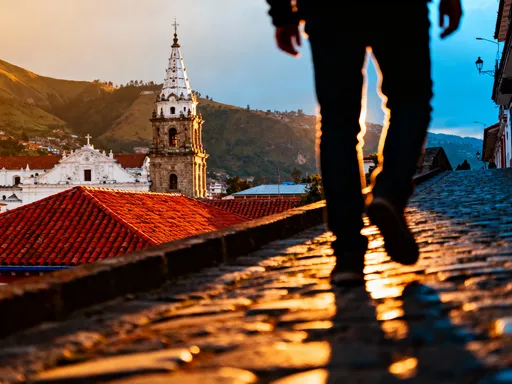
My journey began in La Mariscal, a lively neighborhood known for its boutique hotels, cafés, and weekend markets. At first glance, it felt modern and accessible—perfect for travelers easing into the altitude. But just a few blocks west, the city began to change. The sidewalks narrowed, the traffic thinned, and the buildings grew taller, their facades adorned with intricate stucco work and flower-filled balconies. I followed Calle Venezuela uphill, one of the main arteries leading into the historic center, and soon found myself stepping back in time.
The transition was gradual but unmistakable. Brightly painted homes in ochre, terracotta, and cobalt gave way to restored colonial mansions with massive wooden doors, some carved with religious symbols or family crests. The rooftops, covered in traditional red clay tiles, cascaded down the hills like waves frozen mid-motion. Above it all, the distant silhouette of Pichincha Volcano loomed, a constant reminder of the powerful natural forces that frame daily life here.
It was on a quiet stretch near Plaza San Blas that it hit me: I wasn’t just walking through a city. I was moving through layers of history. A woman in a traditional pollera skirt paused to greet her neighbor. A street musician played a haunting melody on a quena flute. A small dog napped in the shade of a carved stone fountain. These weren’t performances for tourists—they were moments of ordinary life unfolding in an extraordinary setting. For the first time, I understood that urban hiking in Quito isn’t about ticking off attractions. It’s about presence. It’s about allowing yourself to be surprised by beauty in the most unexpected places—like a hidden courtyard blooming with bougainvillea or a centuries-old chapel where candles still flicker behind stained glass.
The Spanish Colonial Blueprint: What Makes Quito’s Architecture Unique
Quito’s architectural identity is rooted in the Spanish colonial period, which began in the 16th century after the arrival of the conquistadors. But what makes it truly special is the fusion of European design with indigenous artistry. The result is a style that is both grand and intimate, religious and deeply human. At the heart of this tradition is the Quito School of Art, a movement that flourished between the 17th and 18th centuries and produced some of the most exquisite religious sculptures and paintings in the Americas.
Key features of colonial architecture in Quito include thick adobe walls, which provide insulation against the cool mountain climate, and central courtyards—known as patios—that serve as private oases for families. These inner gardens are often surrounded by arched walkways and lined with potted plants, creating a sense of sanctuary even in densely packed neighborhoods. Windows are typically framed with ornate stonework, and doors are made of heavy, hand-carved wood, often reinforced with iron studs for security.
But it is the churches that truly showcase the city’s artistic legacy. La Compañía de Jesús, often called the Golden Church, is a masterpiece of Baroque design. Its interior is almost entirely covered in gold leaf, with intricate carvings depicting angels, vines, and biblical scenes. Every surface seems to shimmer, creating a space that feels both awe-inspiring and deeply spiritual. Similarly, the Cathedral of Quito and the Monastery of San Francisco are testaments to the skill of local artisans who, despite colonial rule, infused European forms with Andean symbols and sensibilities.
Today, preservation efforts are ongoing. The city government, in collaboration with UNESCO and local organizations, has invested in restoring facades, reinforcing foundations, and upgrading infrastructure without compromising historical integrity. Walking through the old town, you’ll see scaffolding around some buildings—evidence of careful, ongoing work. But rather than detract from the experience, these efforts add to the authenticity. They remind visitors that history isn’t static. It’s alive, evolving, and cared for by the people who call this city home.
Up the Hill: Hiking from Plaza Grande to El Panecillo
One of the most rewarding urban hikes in Quito begins at Plaza Grande, the city’s main square, and climbs steadily toward El Panecillo, a small hill crowned with a towering statue of the Virgin of Quito. The route covers approximately 2.5 miles and gains about 600 feet in elevation, making it moderately challenging but entirely manageable for most fitness levels. The key is to start early—ideally between 8 and 9 a.m.—when the air is crisp, the light is soft, and the streets are still waking up.
From Plaza Grande, you’ll pass the Presidential Palace, the Archbishop’s Palace, and the Metropolitan Cathedral, all facing the open square. The cathedral’s neoclassical façade stands in contrast to the more ornate churches further inland, but its interior holds centuries of history, including the tomb of independence hero Sucre. As you head west on Calle Sucre, the street begins to rise, and the colonial architecture becomes denser. Shops give way to residences, and the noise of traffic fades into the sound of church bells and distant music.
About halfway up, you’ll reach the Church of La Compañía de Jesús, a jewel of Baroque architecture. Even if you’ve seen photos, nothing prepares you for the impact of stepping inside. The walls seem to pulse with gold, and the ceiling is a labyrinth of carved detail. Just beyond it lies the Monastery of San Francisco, the oldest religious complex in South America, dating back to 1537. Its main plaza is one of the largest in Quito, and its museum houses an impressive collection of religious art, including works from the Quito School.
The final ascent to El Panecillo is steeper, but the views make every step worthwhile. Once at the top, you’ll be rewarded with a panoramic vista of the entire city, stretching north to south along the narrow valley. The Virgin of Quito, a 45-foot aluminum statue based on a 18th-century wooden sculpture, spreads her wings over the capital like a guardian. From this vantage point, you can trace the red-tiled roofs snaking up the hillsides, follow the curve of the Guápulo ravine, and see how the modern and historic parts of the city coexist. It’s a moment of stillness and awe—a perfect culmination of a journey that has been as much inward as it has been outward.
Hidden Corners: Off-the-Beaten-Path Neighborhoods with Character
While Plaza Grande and El Panecillo draw the crowds, some of Quito’s most enchanting experiences lie in its lesser-known neighborhoods. La Ronda, officially known as Calle García Moreno, is one such gem. This narrow, cobblestone street has been a commercial and cultural artery since colonial times, connecting the southern and northern parts of the city. Today, it’s lined with antique shops, family-run restaurants, and artisans selling handmade goods—from silver jewelry to painted retablos, small devotional paintings on tin or wood.
Walking through La Ronda feels like stepping into a different era. The buildings lean slightly toward one another, their balconies almost touching overhead, creating a canopy of shadows and light. Local elders sit outside their homes, sipping tea and watching the world go by. Children chase each other between stalls, and the scent of cuy (guinea pig), a traditional Andean dish, wafts from open-air kitchens. It’s a place where time moves slowly, where every shopkeeper knows their neighbors by name, and where history isn’t just preserved—it’s lived.
Another quiet treasure is Santa Bárbara, a residential neighborhood just east of the historic center. Less frequented by tourists, it offers a glimpse into everyday life among beautifully restored colonial homes. The streets are steep and winding, but the views of the city below are breathtaking. Small plazas serve as community gathering spots, where families picnic on weekends and musicians play in the evenings. One particularly charming spot is the Plaza de Santa Bárbara, where a weathered stone fountain stands at the center, surrounded by benches and flowering shrubs.
What makes these neighborhoods so special is their authenticity. There are no souvenir kiosks or overpriced tour packages—just real life unfolding in a historic setting. You might stumble upon a woodworking studio where a craftsman hand-carves furniture using techniques passed down for generations. Or you might find a tiny café where an elderly woman serves empanadas de verde, fried plantain pockets filled with cheese, from her kitchen window. These moments aren’t staged. They’re gifts to the attentive traveler who takes the time to wander beyond the main routes.
Hiking Smart: Practical Tips for Combining Architecture and Adventure
Urban hiking in Quito is accessible to most travelers, but a few practical considerations can make the experience safer and more enjoyable. First, pay attention to the weather. The city has a mild, spring-like climate year-round, but afternoon showers are common, especially from January to April. Starting your hike in the morning not only helps you avoid rain but also reduces exposure to crowds, allowing for quieter, more reflective exploration.
Dress in layers. Mornings can be cool at this altitude, but temperatures rise quickly once the sun is high. A moisture-wicking base layer, a light fleece, and a packable rain jacket are ideal. Wear comfortable, broken-in walking shoes with good grip—many streets are cobblestone or uneven, and some inclines are steep. Don’t forget a wide-brimmed hat and sunscreen; the equatorial sun is strong, even on cloudy days.
Stay hydrated. The high altitude can cause fatigue or mild dizziness, especially for those not acclimated. Carry a reusable water bottle and sip regularly. Many cafes and convenience stores sell bottled water, and some public plazas have drinking fountains. It’s also wise to carry small bills, as many small vendors and local eateries don’t accept credit cards.
Navigation is easier with a downloaded map or offline GPS app, but don’t hesitate to ask for directions. Locals are generally friendly and proud of their city’s heritage. If possible, consider hiring a local guide for part of your hike. Certified guides can provide historical context, point out architectural details you might miss, and share stories that bring the city to life. They also know the safest and most scenic routes, particularly in areas with narrow or poorly lit streets.
Finally, practice respectful observation. While photography is encouraged, be mindful of private residences. Many colonial homes are still family-owned, and residents appreciate discretion. Avoid touching walls or carvings, and never enter a courtyard or church without permission. By honoring the space and its people, you contribute to the preservation of Quito’s cultural legacy.
Beyond the Facade: Why This Hike Changed How I See Cities
This journey through Quito’s colonial streets did more than satisfy my curiosity—it changed the way I travel. I used to think of cities as destinations to be seen, checked off, and photographed. But hiking through Quito taught me that cities are meant to be felt. They are meant to be climbed, explored, and understood piece by piece. Each step upward revealed not just a new view, but a new layer of meaning—how faith shaped architecture, how art preserved identity, how communities endure across generations.
There’s a quiet power in moving through a city on foot. It slows you down. It forces you to notice details: the way a door’s iron handle is shaped like a lion’s head, the faint outline of a colonial fresco peeking through layers of paint, the laughter of children playing in a hidden courtyard. These are the moments that stay with you long after the trip ends. For women who travel not just for escape but for enrichment, this kind of experience is invaluable. It’s not about luxury or convenience—it’s about connection.
Moreover, urban hiking supports sustainable tourism. By walking, you reduce your carbon footprint. By visiting local shops and cafés, you contribute directly to the community. By learning and respecting the culture, you become a steward of preservation. Quito shows us that tourism doesn’t have to be extractive. It can be reciprocal—a gift exchanged between visitor and host.
And perhaps most importantly, this hike reminded me that adventure doesn’t always require a remote jungle or a distant summit. Sometimes, it’s just around the corner, up a quiet street, behind an old wooden door. All it takes is the willingness to walk, to look closely, and to let the city speak to you.
This hike wasn’t just about views—it was about vision. Quito taught me that architecture isn’t just something you see. It’s something you feel when your legs burn climbing centuries-old streets, when your breath catches at a sunlit bell tower, when you realize every doorway holds a story. Urban hiking here isn’t a trend—it’s a revelation. And if you come for the scenery, you’ll stay for the soul.